
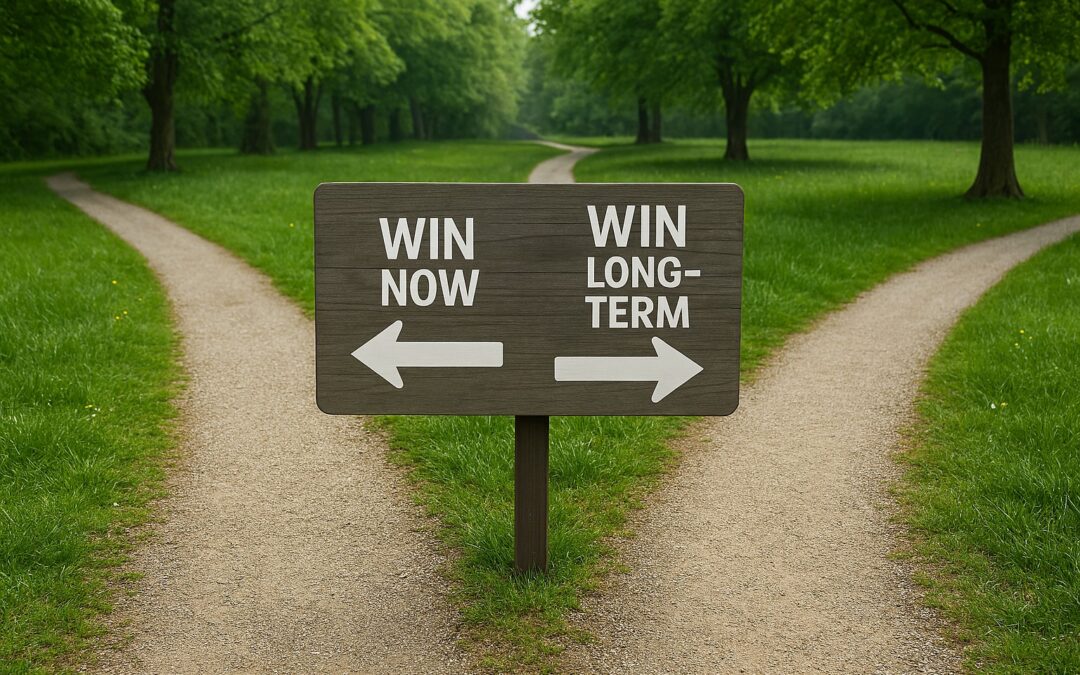
I was recently in a conversation with an executive who found himself in a difficult negotiation with one of his top clients. The project they were working on had been delayed, and the client was pushing for penalties associated with the timeline. The facts were clear, and my client was in the right. She had the documentation, the communication trail, and the data to support her case. She could have continued to press. She could have dug in.
She looked at me and asked, “What do you think I should do?”
I told her, “There are two answers.”
Answer #1: The 45‑Year‑Old Version of Me
I said, “If you had asked the 45‑year‑old executive coach version of me, I would have told you this: If you’re right, stick to your guns. If the data supports your case, stand your ground. If you can avoid penalties, avoid them.”
Back then, the goal was clear: win the negotiation. Winning meant proving your point, protecting your margins, and making sure you didn’t give an inch you didn’t have to give.
And honestly… the younger version of her agreed. She felt the pride. She felt the desire to win. She felt the urge to be right.
But then I offered her a second answer.
Answer #2: The Executive Coach in His 60s
I paused and said:
“Now let me answer as the executive coach I am today.”
Remember—it’s one of your top clients. Think about the relationship in terms of years, not this transaction. Forget for a moment that you’re right. Ask yourself: What does winning really cost you long‑term?
If you “win” today but strain the relationship, what does that look like over the next five years? Ten years? Across future opportunities? Across referrals and reputation?
What does paying a few thousand dollars now actually cost you in future revenue? And what does not paying cost you in future trust?
She sat quietly. And then he said something honest:
“Yeah… the younger me would’ve fought this to the end.”
Instead, she decided to split the difference. A compromise. Not because she wasn’t right, and she certainly was not a weak negotiator—but because she wanted to be wise.
The Next Day Changed Everything
The very next day, she got a call from the same person she had been negotiating with. That person had been contacted by another office—one looking to do a similar project.
And what did they do?
They gave him a 100% endorsement. No hesitation. Full recommendation. Door wide open for a sizable new opportunity.
We both sat there thinking the exact same thing:
What are the chances that would have happened if she had stuck to his guns and refused to negotiate?
Almost zero.
The Lesson: Sometimes the “Win” Is Really a Loss
As a younger executive, I believed in winning the moment. As a seasoned executive coach, I believe in winning the relationship.
Here’s what the years have taught me:
– Pride is expensive.
– Short‑term victories can become long‑term losses.
– Relationships are assets—and they appreciate over time.
– Compromise isn’t weakness; it’s strategy.
– Concessions today can create opportunities tomorrow.
We don’t lose by bending. We lose by being rigid.
The older me has learned this truth the hard way: It’s always best to find another day. Another day to work together. Another day to earn trust. Another day to grow the business.
Sometimes win‑lose outcomes are the right outcomes—especially when the relationship matters more than the moment.
And in this case, compromise didn’t cost her anything. It paid her back immediately.
Final Thought
There’s a type of wisdom that only comes with time—wisdom that says:
Being right is good. But being relationship‑right is better.
And the leaders who understand that will win far more than they ever lose.