
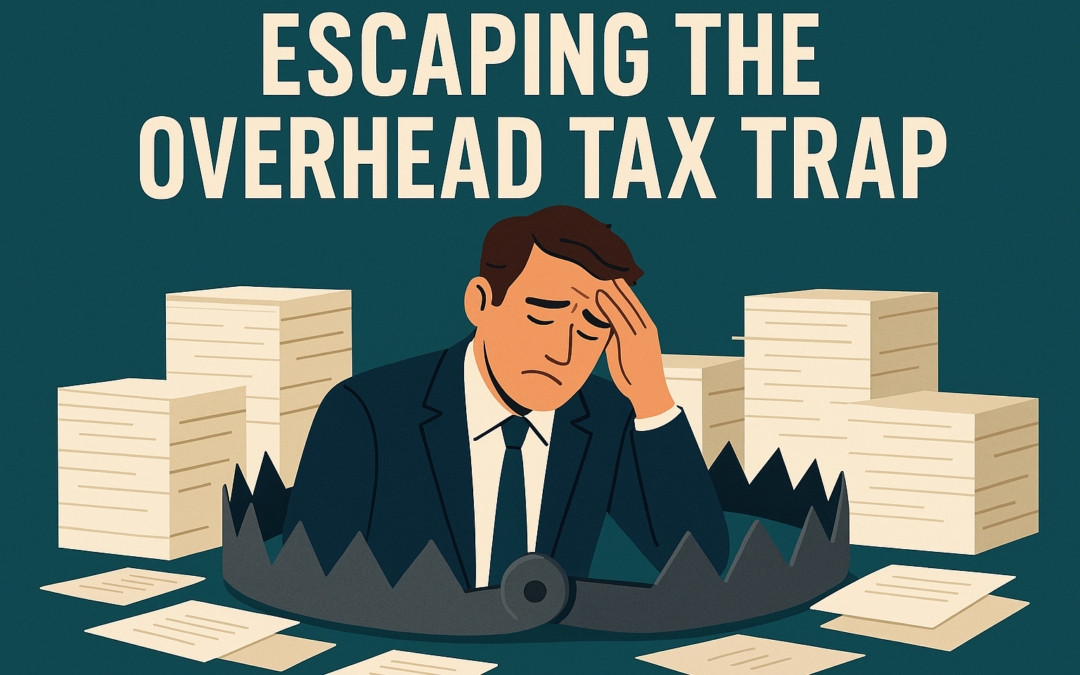
In today’s fast-paced professional world, productivity is often mistaken for busyness. But as Cal Newport reminds us in Slow Productivity, true accomplishment comes not from doing more, but from doing less, better, and slower.
What Does Overhead Tax Look Like for Executives?
One of the most overlooked barriers to meaningful work is what Newport calls the overhead tax—the hidden cost of complexity and overcommitment.
Imagine an executive who’s constantly pulled into meetings, asked to oversee multiple initiatives, and expected to respond to emails at all hours. On paper, they’re productive. In reality, they’re drowning in logistical clutter.
This overhead tax manifests as:
- Mental fatigue from constant context switching.
- Reduced strategic clarity due to fragmented attention.
- Burnout disguised as high engagement.
The tipping point comes when the executive can no longer focus deeply on the few things that truly matter. Quality suffers, and so does impact.
How to Avoid the Overhead Tax
Newport’s framework offers a powerful antidote:
Do Fewer Things
- Prioritize ruthlessly. Ask: Is this the highest-value use of my time?
- Say “no” more often. Every “yes” is a “no” to something else—often something more important.
- Focus on a small number of high-leverage projects. Side benefit: you become the expert in those areas.
Work at a Natural Pace
- Reject urgency culture. Not everything needs to be done immediately.
- Build in time for deep thinking, reflection, and strategic planning.
- Protect your calendar from overload. Leave room for quality work.
Obsess Over Quality
- Shift from volume to excellence. Fewer deliverables, but each one exceptional.
- Quality builds reputation and influence more than quantity ever could.
But What If You Still Feel Overwhelmed?
This is the pushback I hear most often:
“Marc, it sounds great to do less and say no more—but no matter what, I still feel buried.”
Here’s what I tell those executives:
- Start with a “Stop Doing” List. Before adding anything new, identify what you can eliminate. Ask: If I stopped doing this, what would break? If the answer is “not much,” cut it.
- Delegate Like a Pro. Many leaders confuse delegation with abdication. True delegation means transferring ownership, not just tasks. Empower your team to make decisions.
- Time-Block for Strategy. If your calendar is wall-to-wall, you’re managing, not leading. Block 90-minute windows weekly for deep work—and treat them as sacred.
- Audit Your Commitments Quarterly. Complexity creeps in silently. Every 90 days, review your projects and meetings. If they don’t align with your top three priorities, they go.
- Give Yourself Permission. Overwhelm often comes from an internal belief that saying no equals failure. It doesn’t. It’s leadership.
Engineered Simplicity: The Executive Advantage
Simplicity isn’t laziness—it’s strategy. By self-regulating, setting strong boundaries, and resisting the temptation to overcommit, executives can reduce overhead tax and reclaim their focus.
Lead with intention. Accomplish more by doing less. And if you feel overwhelmed, remember: clarity isn’t found in doing everything—it’s found in choosing what matters most.